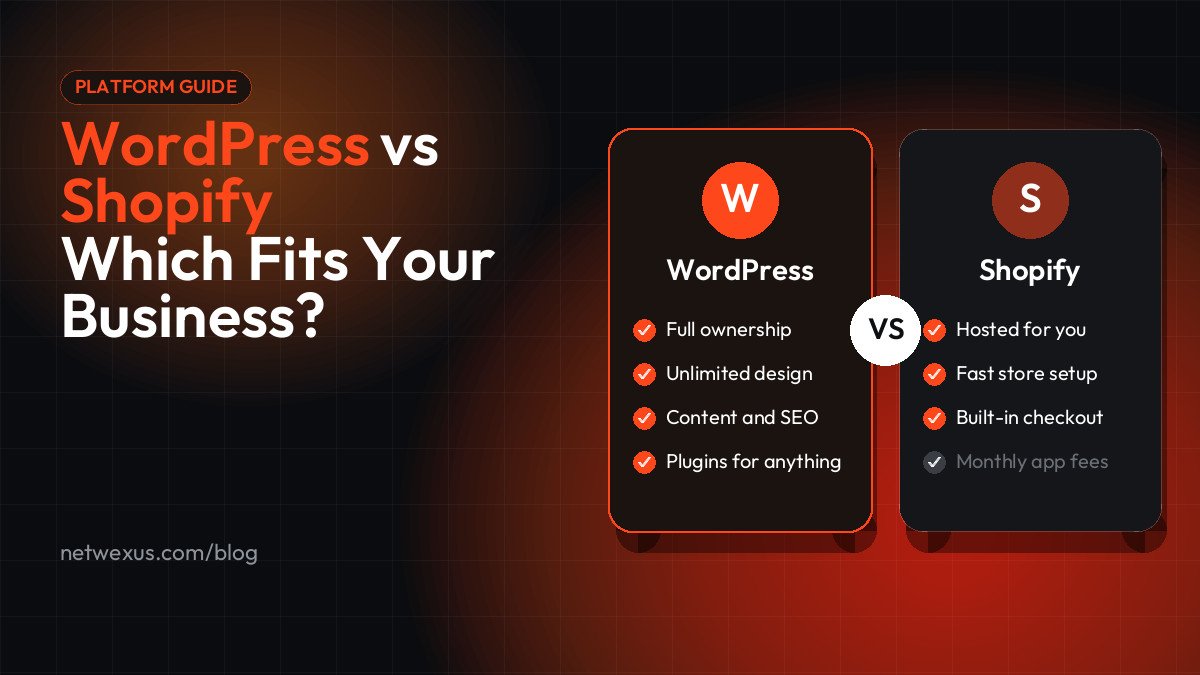
Choosing between WordPress vs Shopify is one of the first big decisions when you plan a new website or online store. Both platforms power a huge share of the web, both can look professional and both can rank on Google. The right choice depends on what you sell, how much control you want and who will manage the site day to day.
This guide compares the two platforms in plain language so you can decide with confidence.
The Short Answer
Choose Shopify if your business is mainly an online store and you want hosting, security and checkout handled for you. Choose WordPress if content, services, lead generation or full ownership matter more, or if you need a site that can grow in any direction. Many businesses that want a store on WordPress use WooCommerce to get the best of both.
How WordPress and Shopify Work
WordPress
WordPress is open-source software that you install on your own hosting. You own the files and the data, you can move hosts at any time and you can extend the site with themes and plugins. That freedom is its biggest strength, and it also means someone needs to look after updates, backups and security.
Shopify
Shopify is a hosted e-commerce platform. You pay a monthly subscription and Shopify runs the servers, security and checkout. You work inside its system, with themes and apps from the Shopify ecosystem. Setup is fast, but some advanced customizations depend on paid apps or developer work.
WordPress vs Shopify: Side-by-Side Comparison
1. Ownership and Control
With WordPress you own everything and can change any part of the site. With Shopify you own your content and customer data, but the platform itself belongs to Shopify and you follow its rules and plans.
2. Running Costs
WordPress itself is free, but you pay for hosting, premium plugins, maintenance and development. Shopify has a predictable monthly fee plus app subscriptions and transaction-related costs that depend on your plan and payment provider. Compare the total over two or three years rather than the first month.
3. Design Freedom
WordPress, especially with a page builder or a custom theme, can take almost any layout. Shopify themes are polished and conversion-focused, and custom theme development unlocks a lot more, but the structure is built around products and collections.
4. SEO
Both platforms can rank well when set up correctly. WordPress gives you more control over URL structure, content types and technical settings, which helps content-heavy and service-based sites. Shopify covers the essentials for stores and works well with clean product data, fast themes and structured data. In both cases, results come from strategy and execution, not from the platform alone.
5. Selling Online
Shopify is built for commerce: inventory, checkout, shipping, taxes and payments work out of the box. WordPress sells through WooCommerce, which is flexible and avoids platform lock-in but needs more setup and ongoing care.
6. Ease of Use
Shopify is easier for a store owner to start alone. WordPress has a bigger learning curve, but a well-built site with a visual editor can be just as easy for your team to update.
When WordPress Is the Better Choice
- Your website is mainly about services, content and generating leads.
- You publish articles, guides or case studies to attract search traffic.
- You want full ownership and freedom to change hosts or developers.
- You need custom features such as booking, memberships or directories.
- You plan to sell online but want to avoid monthly app stacks, using WooCommerce.
Learn more about our WordPress development services and WooCommerce development.
When Shopify Is the Better Choice
- Selling products is the core of your business.
- You want hosting, security and checkout managed for you.
- You need to launch a store quickly with a reliable checkout.
- Your team prefers a simple, focused dashboard.
- You plan to sell across marketplaces and social channels.
See how our Shopify development services help brands launch and grow stores.
Questions to Ask Before You Decide
- Is the website mainly a store, or mainly a lead generator?
- Who will update the site every week?
- How important is owning the platform and data?
- What features do you need in the next two years?
- What is your realistic budget for running costs and maintenance?
Frequently Asked Questions
Is WordPress or Shopify better for SEO?
Both can rank well. WordPress offers more technical control for content-led sites, while Shopify handles store SEO basics well. The quality of your content, site speed and structure matter more than the platform.
Can I move from Shopify to WordPress later?
Yes. Products, customers and orders can be migrated, and URL redirects protect your rankings. Planning the move carefully is the key.
Can a WordPress site have an online store?
Yes. WooCommerce turns WordPress into a full online store with products, checkout and payments.
Need Help Choosing?
Netwexus builds on both platforms, so our advice is based on your goals, not a preference for one tool. Request a free quote and we will recommend the right platform for your business, with a clear plan and price.