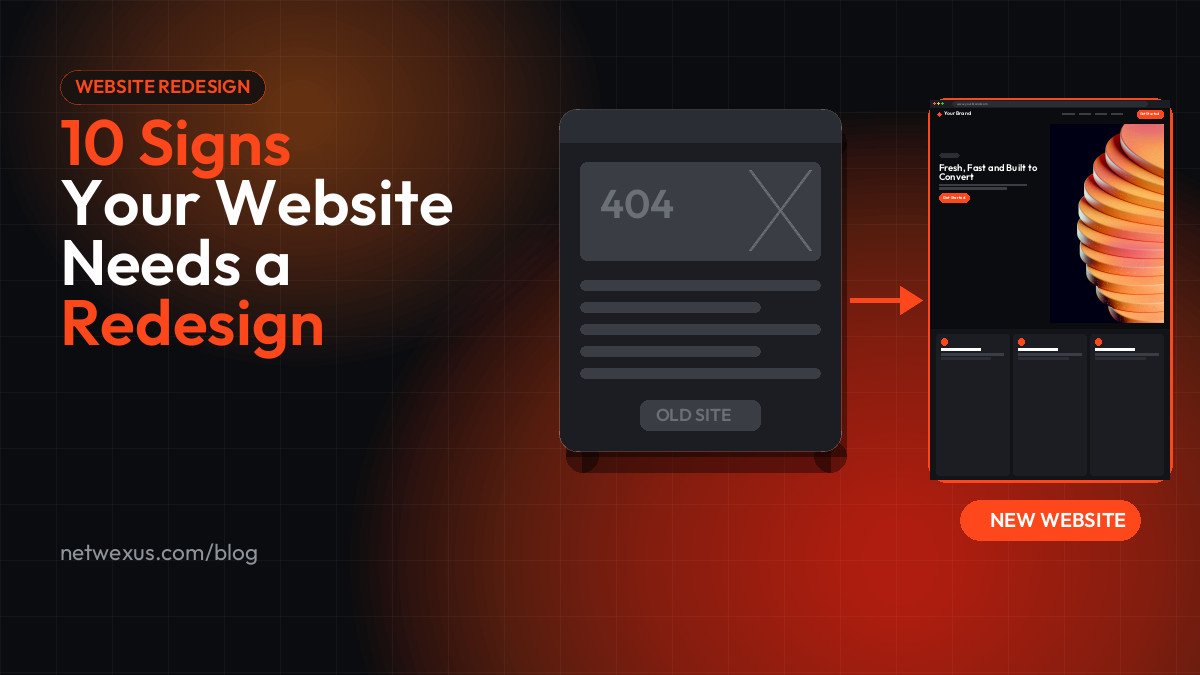
Your website is often the first impression a customer has of your business. If it looks dated, loads slowly or makes people hunt for information, it quietly sends potential customers to competitors. Here are ten signs that a website redesign should be on your plan, and what to do about each one.
1. It Looks Outdated
Design trends change, and customers notice. Old layouts, low-quality images and inconsistent fonts can make a strong business look less trustworthy than it really is.
2. It Is Hard to Use on a Phone
Many visitors now arrive on mobile. If text is tiny, buttons are hard to tap or pages need sideways scrolling, people leave. A modern, mobile-first design fixes this from the ground up.
3. Pages Load Slowly
Visitors expect pages to load quickly, and Google measures page experience through Core Web Vitals. Heavy images, outdated code and too many plugins are common causes of a slow site.
4. Visitors Do Not Contact You
Traffic without inquiries usually points to unclear messaging, weak calls to action or forms that are too long. A redesign can put your offer, proof and contact options exactly where visitors look.
5. Your Business Has Changed
New services, new markets or a new brand should be reflected online. If your website describes the business you were three years ago, it is time to update it.
6. You Cannot Update It Yourself
If every small text change needs a developer, content goes stale. A redesign on a user-friendly system lets your team edit pages, add news and publish offers quickly.
7. It Is Not Built for SEO
Missing page titles, duplicate content, poor heading structure and no internal linking all limit how well you can rank. Redesigning with on-page SEO built in gives every page a clear purpose.
8. Security Warnings or Old Software
Browser warnings, missing HTTPS or software that has not been updated for years put both visitors and your data at risk. Modern builds follow current security practices and receive regular updates.
9. It Does Not Work With Your Tools
Your website should connect to the tools you use: CRM, booking, email marketing, payments or inventory. If information has to be copied by hand, a redesign can automate it.
10. Competitors Look Better Online
Customers compare. If competitors offer clearer information, faster sites and easier booking, they win the click and the customer, even when your service is better.
How to Redesign Without Losing Rankings
A redesign should improve search visibility, not reset it. Follow these steps:
- Audit the current site. List the pages that already bring traffic and leads.
- Keep valuable URLs or set up 301 redirects from every old URL to its new home.
- Carry over and improve content rather than deleting pages that rank.
- Test on a staging site before launch, including speed, mobile layout and forms.
- Monitor after launch in Google Search Console and fix crawl errors quickly.
Redesign or Rebuild?
A refresh updates design and content on the existing system. A rebuild moves to a new platform or codebase, which makes sense when the current site is slow, insecure or impossible to extend. A good partner will recommend the option that fits your goals and budget.
Frequently Asked Questions
How often should a business redesign its website?
There is no fixed rule. Many businesses review their website every few years, and sooner when the business, technology or customer expectations change.
Will a redesign hurt my Google rankings?
Not if it is planned well. Keeping or redirecting URLs, preserving strong content and testing before launch protect your rankings, and often improve them.
How long does a website redesign take?
Smaller business sites can take a few weeks, while larger sites with many pages and integrations take longer. A clear scope sets the timeline.
Ready for a Better Website?
Our website development team designs fast, modern sites that are easy to manage and built to rank. Browse our projects or request a free website redesign quote.